Site under construction. Stay tuned for the full 2026 World Cup experience coming soon!

Live Breaking
Premium Collection

The Spotlight

Revisit the greatest moments and figures in sports history.

Ayyoub Bouaddi
Rising Star

Ayyoub Bouaddi

Who is Ayyoub Bouaddi, Morocco's 18-year-old sensation in World Cup?

There's a rising star in the World Cup, and his name is Ayyoub Bouaddi.

Soccer fans around the world got a glimpse of stardom in Morocco's opening match of the tournament, when the Atlas Lions stood tall in an entertaining battle that ended in a 1-1 draw. In the match, Bouaddi stood out, playing an excellent brand of ball and impacting the game in several ways, all at the young age of 18.

After an impressive first match, people are now awaiting to see what Bouaddi can do next. Here is what to know about the teenager coming up big for Morocco:


Who is Ayyoub Bouaddi?

Bouaddi is a midfielder for the Morocco men's national team.

Ayyoub Bouaddi age

Bouaddi is 18 years old.

Where is Ayyoub Bouaddi from?

Bouaddi is from Senlis, France. He plays for Lille in France's Ligue 1.

How does Ayyoub Bouaddi play for Morocco?

Even though he's from France and still plays in his home country, Bouaddi decided in May to play for Morocco. He is able to play for Morocco because his parents are from the country.

When he revealed his decision, he posted on Instagram a photo from his youth, wearing a Morocco kit.


“The coach and the president told me immediately that choosing Morocco was the right decision and that I would receive an incredible welcome,” Bouaddi explained of his decision, according to Morocco World News. "They did not lie. The welcome has been incredible, the facilities are top-level, the team is fantastic, so everything is perfect. I am very happy to represent my country, Morocco."


usatoday.com

Play of the Day

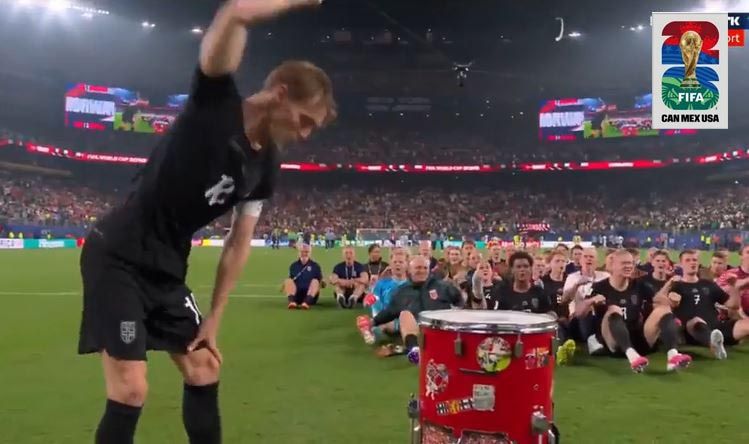
Viking style celebration after Norway's qualification for the round of 32

Viking style celebration after Norway's qualification for the round of 32

Featured:

Football Highlights

FIFA World Cup 2026 Geo App. The first-ever GIS-based World Cup application

FIFA World Cup 2026 Geo App. The first-ever GIS-based World Cup application

Featured: FIFA World Cup 2026 Geo App

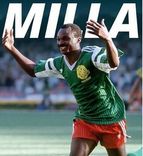
Roger Milla
Influence / Legend

Roger Milla

Roger Milla is a legendary Cameroonian former professional footballer who is globally celebrated as the oldest goalscorer in FIFA World Cup history. Born Albert Roger Miller on May 20, 1952, Milla became an international icon during the 1990 World Cup at the age of 38, captivating fans with his brilliant substitute performances and his trademark hips-swiveling dance celebration at the corner flag.

In 2004 he was named by Pelé in the FIFA 100 list of the world's greatest living players.[7] In 2007, the Confederation of African Football named Milla the best African player of the previous 50 years.[9] At the time of his retirement, he was regarded as the all-time top-scorer from African region in FIFA World Cup finals with five goals and his record was eventually surpassed by Ghana's Asamoah Gyan


Key Historical Milestones World Cup Records:

He remains the oldest outfield player to score in a World Cup, netting a goal against Russia in the 1994 World Cup at 42 years and 39 days old.

The 1990 Renaissance: He had already retired from international football when Cameroon's president personally requested his return for the 1990 World Cup. He scored four goals, driving Cameroon to become the first African nation to reach a World Cup quarter-final.

Continental Accolades: He was twice named African Footballer of the Year (1976 and 1990) and was honored by CAF as the best African player of the previous 50 years in 2007.

Club Career: Milla played for prominent Cameroonian clubs like Tonnerre Yaoundé before transitioning to a successful French career with teams including Monaco, Bastia, and Montpellier.

Milla was capped 77 times for the national team, scoring 43 goals. Milla made his first appearance for Cameroon in 1973 versus Zaire in a World Cup qualifier.

He made his World Cup debut in also what is considered to be the maiden World Cup appearance for Cameroon when they qualified for the 1982 FIFA World Cup after winning both their final round matches against Morocco at the 1982 FIFA World Cup qualification for the African Zone. Milla played an instrumental role in helping Cameroon to qualify for the 1982 World Cup by top scoring in the 1982 FIFA World Cup qualification for the African Zone competition. He endured mixed emotions at 1982 FIFA World Cup having a goal disallowed against Peru in their first match. Cameroon went out with three draws from their three first-round games. Two years later, he was part of the squad competing at the 1984 Summer Olympics in Los Angeles, California.

Milla was also an integral member of the Cameroonian squad which won the 1984 African Cup of Nations where Cameroon defeated Nigeria 3-1 in the final to secure Cameroon's first ever continental title. He was a key member of the Cameroonian side which emerged as runners-up to Egypt in the final of the 1986 African Cup of Nations and he received the best player award in the tournament for being the top goal scorer with 4. He was also named in 1986 African Cup of Nations team of the tournament. He was also the joint top goalscorer in the 1988 African Cup of Nations with 2 goals alongside Algeria's Lakhdar Belloumi, Abdoulaye Traoré of Ivory Coast and Gamal Abdelhamid of Egypt. He once again played a vital role in Cameroon's trumph at the 1988 African Cup of Nations and for his noteworthy performances throughout the tournament, he was adjudged as the player of the tournament and was also included in the 1988 African Cup of Nations team of the tournament.

In 1988, at the age of 36, Milla celebrated his early retirement from international football with a jubilee in Cameroon. However, in 1990, he received a phone call from the President of Cameroon Paul Biya, who pleaded with him to come out of international retirement and rejoin the national team. He agreed, and went to Italy with the Indomitable Lions for the 1990 World Cup, where he would cause a sensation. It was revealed that Paul Biya wanted Milla to play in the World Cup after watching Milla play in an exhibition charity match which was played at Douala where Milla went on to score two goals. Following the insistence of the Cameroonian President, Milla decided to make a comeback to international football by making an official announcement in May 1990.

It is also reported that most of the Cameroonian teammates and the national head coach Valery Nepomnyashchy who is a Russian did not want Milla to be part of the 1990 FIFA World Cup. Biya issued a decree summoning him to return to the national side and Biya officially signed the decree requesting and compelling the coach to pick him for the World Cup squad. It was also reported that the renowned sportswriters in Cameroon along with fans began a campaign to recall Milla back to the national team following Cameroon's embarrassing display during the 1990 African Cup of Nations in Algeria where Cameroon crashed out from the group stage with defeats to The Gambia and Senegal.


1990 World Cup

Milla scored all his four goals in the tournament as a substitute as he started every game of the tournament on the bench. He started in the second half in four out of five World Cup matches and appeared in the first half once. His two crucial goals came in the second half of the match against Romania within just two minutes in extra time where he once again appeared as a substitute and following his heroics, he was hailed as a hero in Cameroon.

It was the coach Valery Nepomnyashchy who decided to bring in Milla a bit earlier in the game against Romania knowing full well that a victory would secure Cameroon's spot in the knockout stages and the coach later acknowledged the importance of Milla after his important late cameo in Cameroon's remarkable upset victory over defending world champions Argentina. He was the oldest outfield player to feature in the 1990 FIFA World Cup and was the second oldest player during the tournament after England's Peter Shilton.

The 38-year-old Milla emerged as one of the tournament's major stars. He scored four goals in Italy, celebrating each one with a dance around the corner flag that has become a popular goal celebration ever since. Two of his goals came against Romania in Cameroon's second game, and two more came in extra time against Colombia in the last 16 to carry Cameroon to the quarter-finals, the furthest an African team had ever advanced at the World Cup (Senegal and Ghana matched this feat in 2002 and 2010 respectively, whilst Morocco surpassed it by reaching the semi-finals in 2022). In the quarter-final match against England, Milla confirmed his super-sub legend by entering in the second half with Cameroon trailing 1–0 and drawing a penalty and then setting up a goal for Ekeke to give Cameroon a 2–1 lead, before England later scored two penalties, to win 3–2 after extra time. Due to his performances in Italy, he was once again named African Footballer of the Year.[citation needed]

His second goal celebration against Colombia became iconic across the world, and was used by Coca-Cola as seen in ads like the 2010 World Cup Coca-Cola advertisement.


1994 World Cup

Milla returned to the 1994 FIFA World Cup at the age of 42, being the oldest player ever to appear in a World Cup until the 2014 tournament when Colombia's Faryd Mondragón entered in a group stage match versus Japan when 43 years and 3 days old. Mondragon's record in turn was beaten by Essam El Hadary in 2018. Cameroon were knocked out in the group stages; however, Milla scored a goal against Russia, setting a record as the oldest goalscorer in a World Cup tournament, breaking the record he had set in 1990. His final international appearance came in a friendly against South Africa in December 1994
Football Highlights

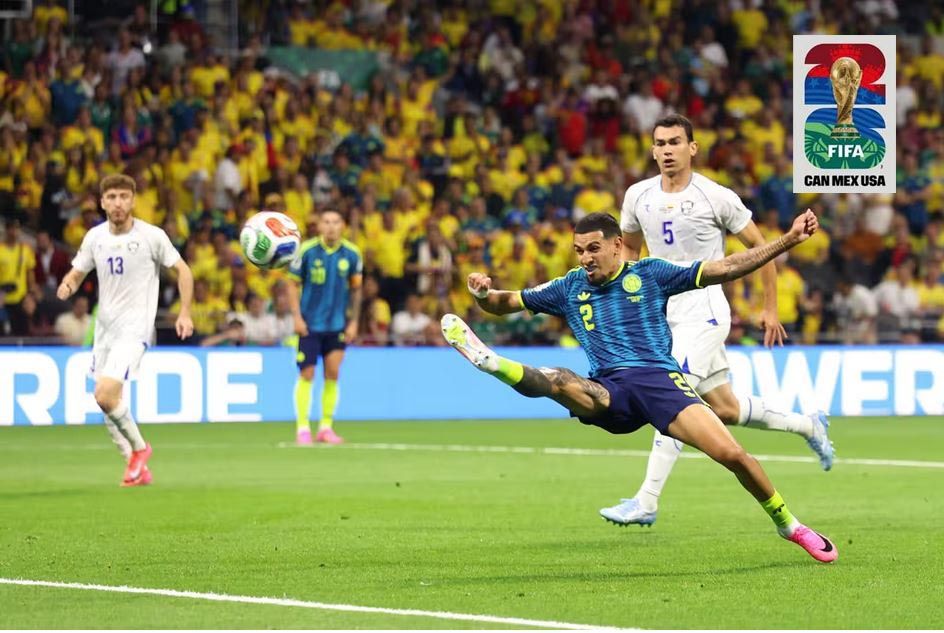
Muñoz Amazing Goal Against Uzbekistan

Muñoz Amazing Goal Against Uzbekistan

Featured: Daniel Muñoz

Jalen Brunson
Rising Star

Jalen Brunson

Jalen Brunson is an NBA Champion, Finals MVP, and franchise cornerstone who led the New York Knicks to their first title since 1973. His resume includes three All-Star selections, three All-NBA Second Team honors, and two NCAA championships, firmly establishing him as an all-time great.


NBA Achievements

NBA Championship: Led the Knicks to the title in 2026, ending a 53-year championship drought for the franchise.

Finals MVP & ECF MVP: Named the 2026 Finals MVP and Eastern Conference Finals MVP, becoming the fourth player in NBA history to score at least 45 points in a Finals-clinching game.

All-NBA & All-Star: Earned three consecutive All-NBA Second Team selections (2024–2026) and three consecutive All-Star nods.

In-Season Tournament: Won the 2025-26 NBA Cup (In-Season Tournament) and was named the Cup's MVP.

Clutch Player of the Year: Awarded the NBA's Clutch Player of the Year in 2025.

Playoff Records: Holds franchise records for the most playoff points, assists, and three-pointers made in Knicks history

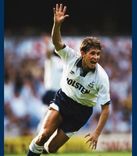
Gary Lineker
Influence / Legend

Gary Lineker

No Englishman has scored more World Cup goals than Leicester-born striker Gary Lineker.

The 1986 World Cup Golden Boot winner also starred in England’s run to the 1990 World Cup semi-final, and finished as Division One’s top scorer three times, each with a different club.

His career began in Division Two with his hometown club. Over seven seasons with Leicester City Lineker was promoted twice but, having scored 29 goals in the 1984/85 season, he was finally prised away from Filbert Street by defending champions Everton for £800,000.

By this time, Lineker was known for his prowess in the opposition area. The striker’s ability to find space in the box, combined with great pace and a ‘poacher’s instinct’ made him one of the hottest properties in English football.

He was to spend just one season at Goodison Park, hitting 38 goals in all competitions and heading to the World Cup with England as the league’s top scorer and having scored his first of 5 England hat-tricks in a qualifying game against Turkey.

His next England hat-trick was to come in the World Cup itself, against Poland in the Three Lions’ must-win final group game. Three goals in the first 35 minutes illustrated Lineker’s deadly talent; each a one-touch finish applied within the box.

In all, Lineker scored 48 goals for England in 80 appearances. England manager Bobby Robson summed up his talent; “Gary was simply the best finisher I’ve ever seen.”.

Lineker was voted Footballer Of The Year after his performances for Everton and England in 1986, but was to finish the year playing at the Nou Camp, as Barcelona paid a record £2.2million for his services after the World Cup.

His manager at Everton, Howard Kendall, was aware of Lineker’s best qualities; “No one could match Gary’s pace over 40 yards.”. And it was that pace and instinct which he exploited throughout his career: just half a yard on his marker at the near post was often all Lineker needed to apply the deadly finish.

His three seasons in Barcelona were largely successful, with Copa Del Rey and European Cup Winners’ Cup victories meaning Lineker won his first pieces of major silverware with the Catalan giants. But as the system at the team changed, Lineker was moved wide – a position that failed to make the most of his natural instincts, and a return to England with Tottenham Hostpur followed in 1989.

Again, Lineker was the First Division’s top scorer on his return. The 1990 World Cup saw Lineker established as England’s biggest threat, and his experience around the likes of the young Paul Gascoigne was essential. This time, Lineker scored four goals en-route to the semi-final, including the goal which took that fateful match to extra-time and ultimately penalty defeat against West Germany.

In 1991, Lineker won his only piece of domestic silverware, when Spurs triumphed in the FA Cup final.

Lineker left Spurs before the start of the first Premier League season, choosing to take up a new challenge in Japan with Nagoya Grampus Eight, although a persistent foot injury began to limit his ability to play, and he retired in 1994.

Perhaps the archetypal ‘box player’, Lineker’s bravery and willingness to gamble on where the ball would end up – often amongst the flying boots of the six-yard area – made him stand out. His sportsmanship was also exemplary; Lineker was never booked in over 600 club and international games.


Teams, Era, and Achievements:

  • Leicester City (1978–1985): Born in Leicester; scored 95 goals and earned two promotions.
  • Everton (1985-1986): Scored 38 goals in a single magnificent season, finishing as top league scorer.
  • Barcelona (1986–1989): Won the Copa del Rey and the European Cup Winners' Cup in Spain.

Tottenham Hotspur (1989–1992): Won the FA Cup in 1991 and finished as the First Division top scorer.

Nagoya Grampus Eight (1992–1994): Finished his playing career in Japan's newly formed J-League.

England National Team (1984–1992): Scored 48 goals in 80 appearances. Won the Golden Boot at the 1986 World Cup and led England to the 1990 World Cup semi-finals.

Football Highlights

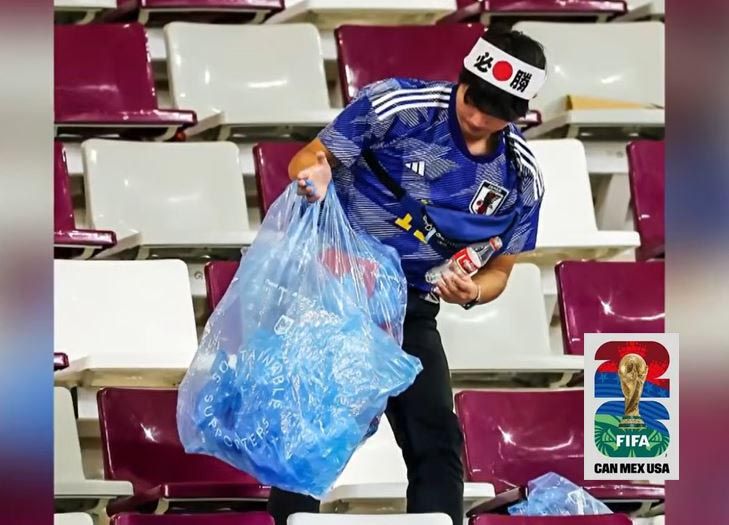
Japanese Fans Clean World Cup Stadium, Continue Tradition

Japanese Fans Clean World Cup Stadium, Continue Tradition

Featured:

Football Highlights

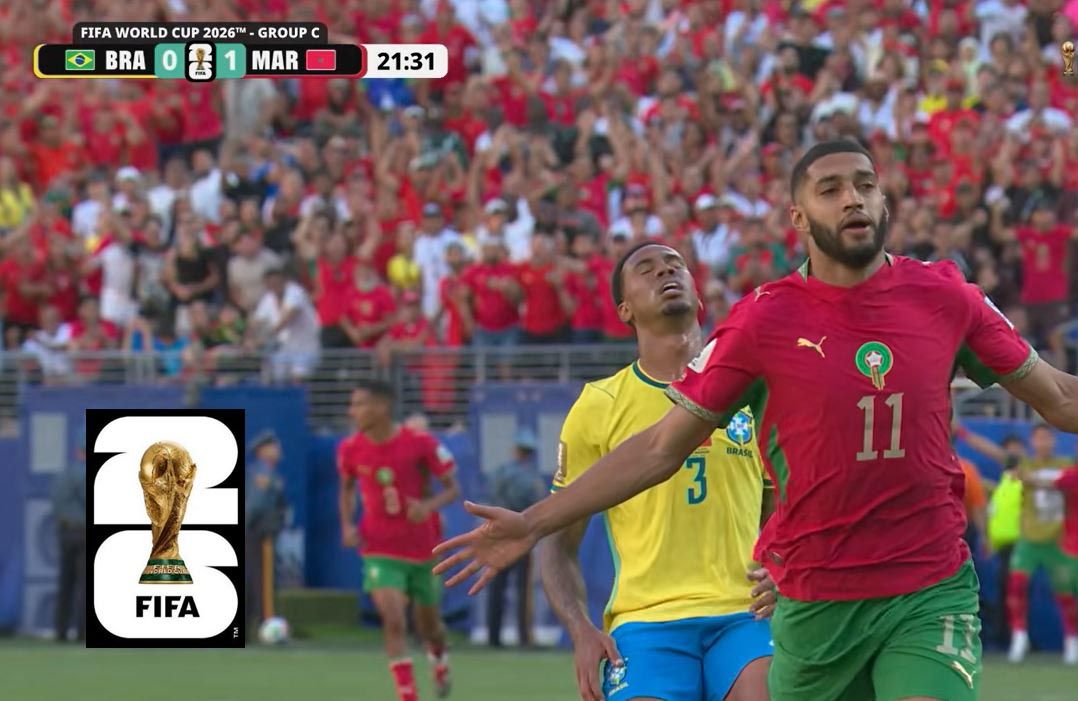
Saibari Goal Against Brazil; a superb finish!

Saibari Goal Against Brazil; a superb finish!

Featured: Ismael Saibari